
How to choose the right outdoor dining table for a Western Cape garden
An outdoor dining table is usually the single largest purchase in furnishing a Cape garden. It is also one of the hardest to change once you build the rest of the space around it. Getting the size, material, and finish right from the start saves a costly rethink later. Here is what actually matters, in the order it is worth thinking about.
Start with how the table will be used
Before anything else, be honest about how you will actually use the table. A table for occasional large family gatherings has different priorities to one that hosts a weekly dinner for four. Antherian makes tables to order in sizes from four to twelve seats. The right choice depends less on your garden's size than on the size of the gatherings you plan to hold.
A common mistake is sizing the table to the available space rather than the number of guests it must seat. A table crowded with twelve place settings looks generous on paper and cramped in practice. Allowing at least sixty centimetres of table edge per seated guest is a reasonable working rule.
Teak or stone-composite?
The two material options each suit a different kind of garden and a different kind of owner. Solid teak brings warmth and a classic look that has furnished outdoor spaces for generations. You can oil it regularly to keep its honey colour. Or leave it untreated. It will weather naturally to a soft silver grey. Many owners prefer this look for its low maintenance and understated character.
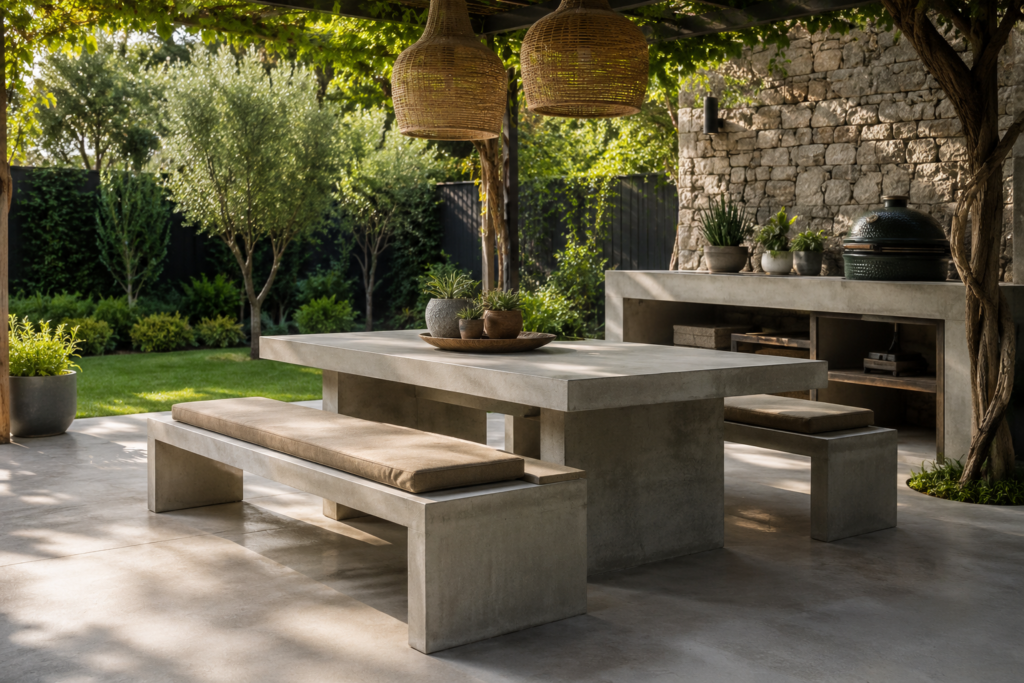
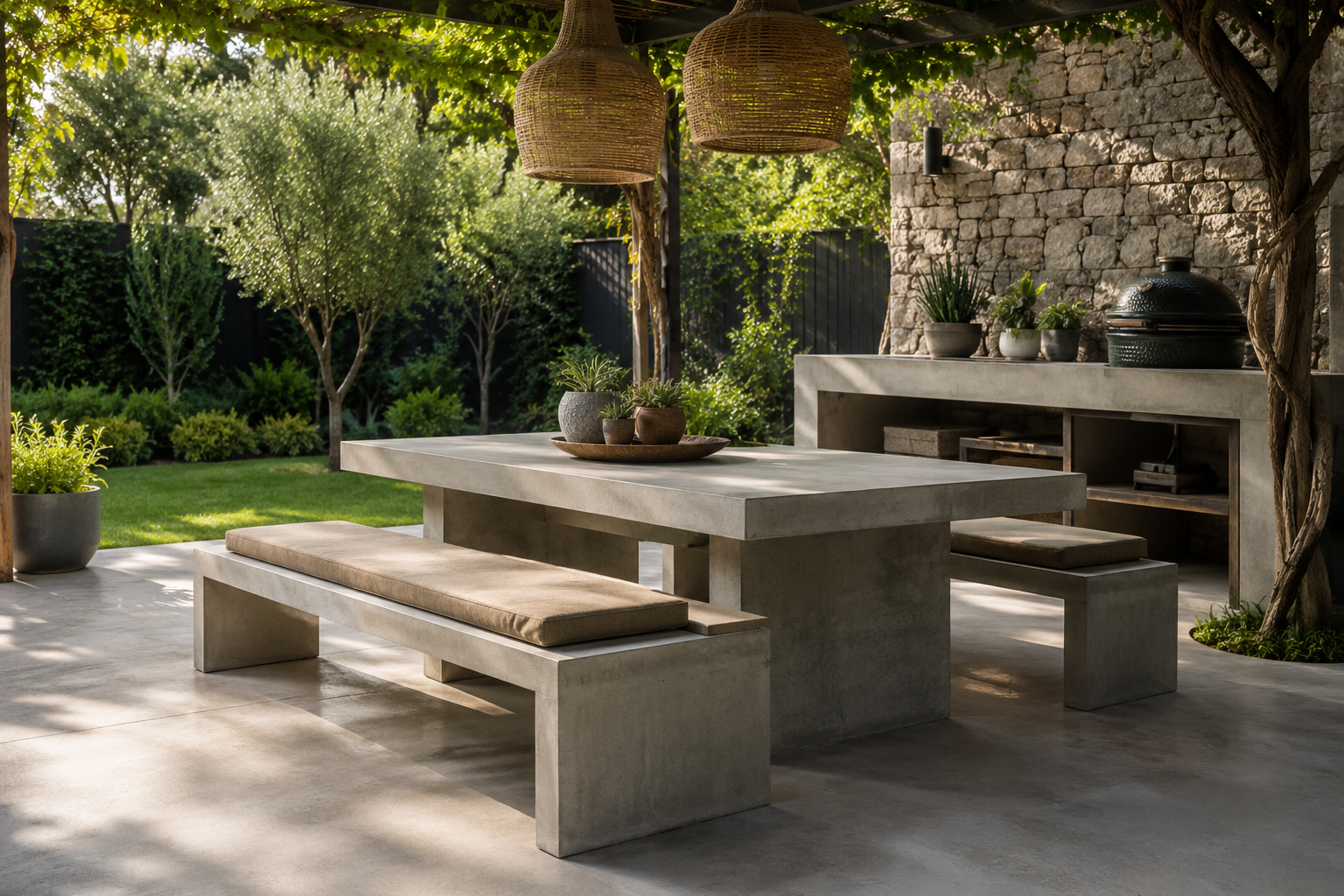
Stone-composite tops offer a more contemporary alternative. Manufacturers make it by crushing natural stone and binding it in resin under pressure. The result is heavier and stays cooler underfoot in full sun. It also resists the staining, cracking, and warping that affect timber over years of coastal exposure. Stone-composite also resists salt air corrosion in a way few other surfaces can match. This matters considerably for gardens within reach of an Atlantic breeze.
Neither material is objectively better. Teak suits a garden that celebrates warmth and natural texture, while stone-composite suits a more architectural, low-maintenance approach. Many Antherian clients choose teak for the chairs and a stone-composite top for the table. This combines the tactile comfort of timber seating with a surface that shrugs off spills, sun, and salt.
Sizing the table to the space
A rectangular table generally seats guests more efficiently than a round one of the same footprint. It also suits a long, narrow terrace better. A round table encourages conversation across the whole group and works well in a more contained courtyard setting. As a guide, a table for four to six typically runs 1.6 to 2 metres in length. One for six to eight runs around 2.2 to 2.6 metres. Larger estate tables for ten to twelve extend beyond 3 metres.
Leave at least a metre of clearance behind every chair, so guests can push back and stand comfortably. Leave more again if the table sits near a walkway that sees regular foot traffic during a gathering.
Matching chairs to the table
Chair weight is worth more consideration than it usually gets. A heavier teak chair holds its position well in wind and feels substantial to sit in. But it is harder to move when cleaning underneath or rearranging the layout. Lighter stacking chairs suit a garden that needs to convert quickly from everyday use to full entertaining. That comes at some cost to that same sense of permanence.
Specify cushions and pads in a fabric rated for outdoor use rather than treating them as an afterthought. A chair that looks finished but sits uncomfortably for two hours rarely earns its place. You will not reach for it during the long lunches you bought it for.
Finish and colour
Teak typically comes in three finishes: natural honey, a deeper stain, or a weathered grey when you leave it untreated. Each ages differently depending on sun exposure and your maintenance routine. Stone-composite tops come in a range of tones that echo the natural stone across the Western Cape. These range from pale sandstone to deeper granite greys. Unlike timber, the finish stays fixed for the life of the table rather than shifting with weathering.
Covered or uncovered
Decide whether the table will sit under a pergola or shade sail, or stand fully exposed to open sky. Make this decision before you choose the material. A covered table has considerably more flexibility. A timber top under permanent shade weathers more slowly and evenly than one in full sun. A stone-composite top under cover shows almost no change at all over many years. A fully exposed table, by contrast, benefits most from stone-composite's resistance to UV and temperature swings. Or it suits an owner who genuinely commits to twice-yearly oiling. This keeps an uncovered teak top looking its best.
A table built to last a Cape summer
Whichever material you choose, the joinery underneath matters as much as the surface. Antherian builds tables on engineered frames that resist seasonal movement. These frames handle twelve months of sun, occasional heavy rain, and the temperature swings of a Cape winter. So the table that arrives in spring still sits level and solid several summers later.
Antherian makes dining tables to order in teak or stone-composite, seating four to twelve. We finish every table to your chosen palette. Enquire about sizes and lead times for your garden.
Your home.
Our obsession.
Every commission begins with a conversation. Tell us about your space, your vision, and how you live. We will take it from there.