
Designing an outdoor bar for entertaining at home
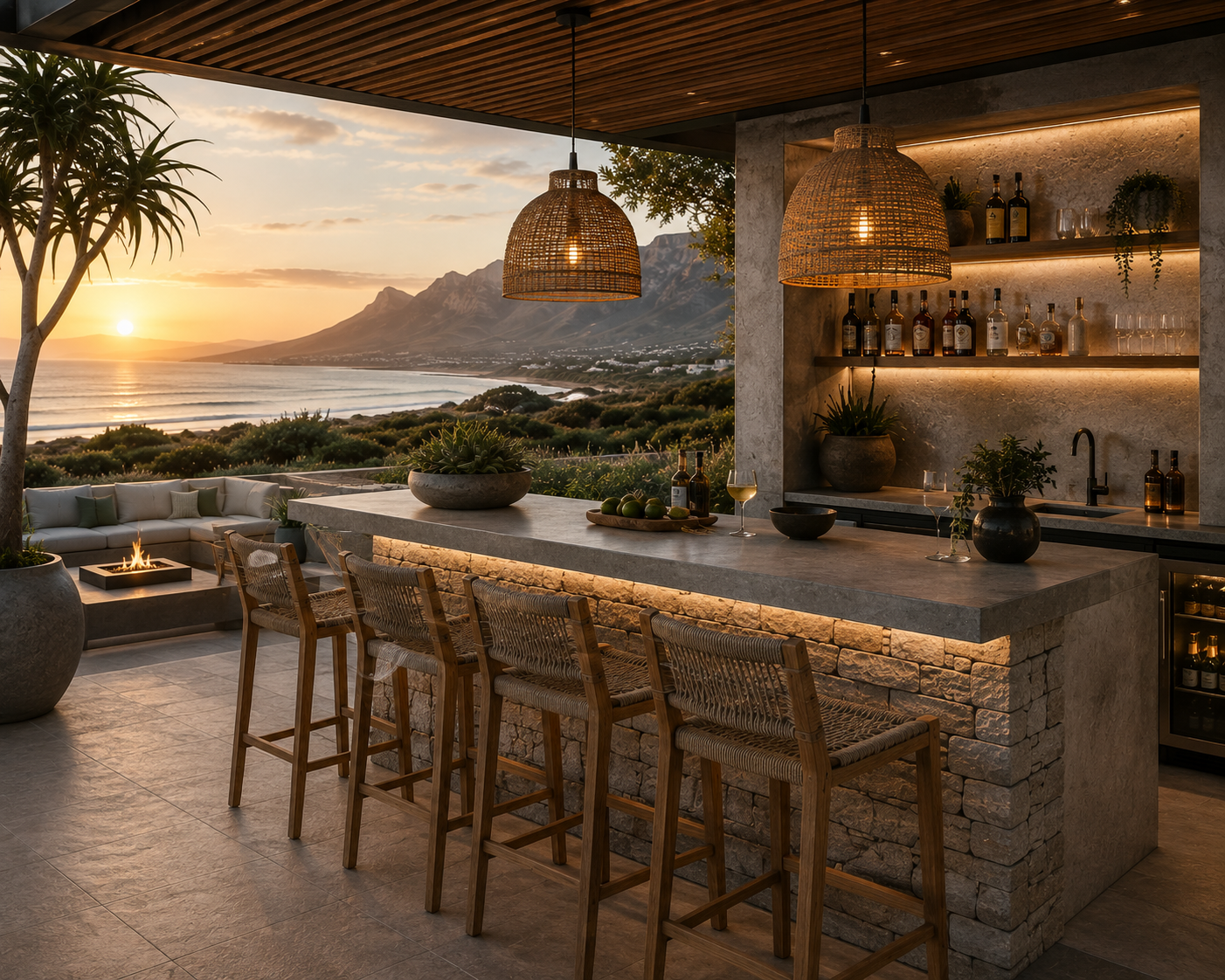
An outdoor bar changes the character of a terrace more than almost any other single piece. Specifically, it shifts the space from somewhere people sit down to eat, towards somewhere people gather, stand, and stay. Here is what actually matters when planning one, from height to placement to material.
Bar height vs counter height
The two most common heights are bar height, around 105 to 110 centimetres, and counter height, around 90 centimetres. Overall, they suit noticeably different kinds of gathering. For instance, bar height creates a more social, standing-oriented atmosphere that suits a drinks-focused evening well. Counter height, by contrast, sits closer to a kitchen island. It also works better for a space that handles food preparation or casual dining.
First, decide on the primary use of the space before you choose a height. After all, mismatching stool height to counter height is one of the most common design mistakes in outdoor entertaining.
Positioning the bar relative to the kitchen
A bar or counter positioned within easy reach of an outdoor kitchen or braai area does considerably more work. By contrast, one placed purely for appearance does far less. For instance, it gives the host a surface to prep on. It also gives guests a place to gather without crowding the cooking area. It creates a circulation path through the space, rather than a single congested zone around the fire or grill.
Materials that handle spills and sun
A bar counter takes more direct wear than almost any other outdoor surface. In fact, it faces everything from condensation rings to spilled drinks to constant sun exposure on an uncovered terrace. Here, stone-composite performs particularly well. Specifically, it resists staining from citrus, wine, and general spills far better than untreated timber. It also offers the visual warmth of a natural stone surface.
If you prefer timber for its tactile quality, choose a sealed or oiled teak surface. Then, maintain it on the same routine as any other teak piece. Overall, it holds up well, provided you clean it promptly after spills rather than leave it to sit.
Seating: stools vs benches
Individual stools suit a bar intended for casual, flexible gathering, and are easier to store or move for cleaning underneath. By comparison, a fixed bench along one side of the counter creates a more settled, communal feel. It works particularly well for a family that uses the space daily rather than only for entertaining. Similarly, weight and stackability are worth considering here, in the same way they matter for dining chairs. This matters most if the bar area needs to convert between everyday and full entertaining use.
Weatherproofing considerations
Any electrical or plumbed elements built into an outdoor bar need genuinely wet, coastal-rated specifications. For example, this includes an integrated fridge, ice well, or sink. Importantly, do not simply adapt an indoor fitting for outdoor use. Instead, it is a detail worth raising directly with whoever is fitting out the bar. Above all, do not assume standard fittings will hold up to salt air and rain over several seasons.
Lighting the bar properly
A bar used mainly after dark needs its own lighting plan. So, do not simply rely on general terrace lighting to carry the whole space. Next, focus task lighting on the counter surface. For instance, recess it into an overhead structure, or run it along the underside of a shelf. As a result, this makes pouring and preparing drinks genuinely easier. Meanwhile, a softer, ambient layer elsewhere in the seating area keeps the mood from feeling like a workspace. Also, any fitting you specify for this kind of use needs an outdoor rating suited to splashes and damp air. Finally, do not simply adapt a fitting from an indoor application.
Storage and display
Open shelving beneath or behind the counter shows off glassware and bottles attractively. But it also leaves everything exposed to dust, UV fading on labels, and, over time, the wear of outdoor air. In contrast, closed cabinetry protects contents more reliably and suits a bar that sits exposed to full weather. On the other hand, open shelving works well under a covered structure such as a pergola. Under that structure, it handles most of the exposure. As a result, most Antherian bar installations use a mix of both. In particular, closed storage suits anything sensitive to light or damp. Alternatively, open display works for glassware and decorative bottles you replace often enough that fading never matters.
Scaling to hospitality vs home
A residential bar generally needs to seat four to six comfortably and prioritise a relaxed, social feel over throughput. By contrast, a hospitality installation, whether for a boutique guesthouse or a restaurant terrace, needs to scale for volume. Specifically, this means wider prep surfaces, more resilient finishes, and a layout planned around service flow rather than social gathering. Either way, Antherian builds bar and counter sets to order. We then scale each one to the architecture of the specific space, rather than sell a single standard configuration.
Whatever the scale, it is worth resisting the temptation to treat the bar as a functional fitting and nothing more. After all, the best outdoor bars get the same care as the dining table or the seating around them. In practice, designers plan them thoughtfully rather than bolt them on afterwards as a practical addition.
Antherian builds bar and counter sets to order, weatherproofed and scaled to your outdoor kitchen or terrace. So, get in touch to discuss layout, height, and materials for your space.
Your home.
Our obsession.
Every commission begins with a conversation. Tell us about your space, your vision, and how you live. We will take it from there.