
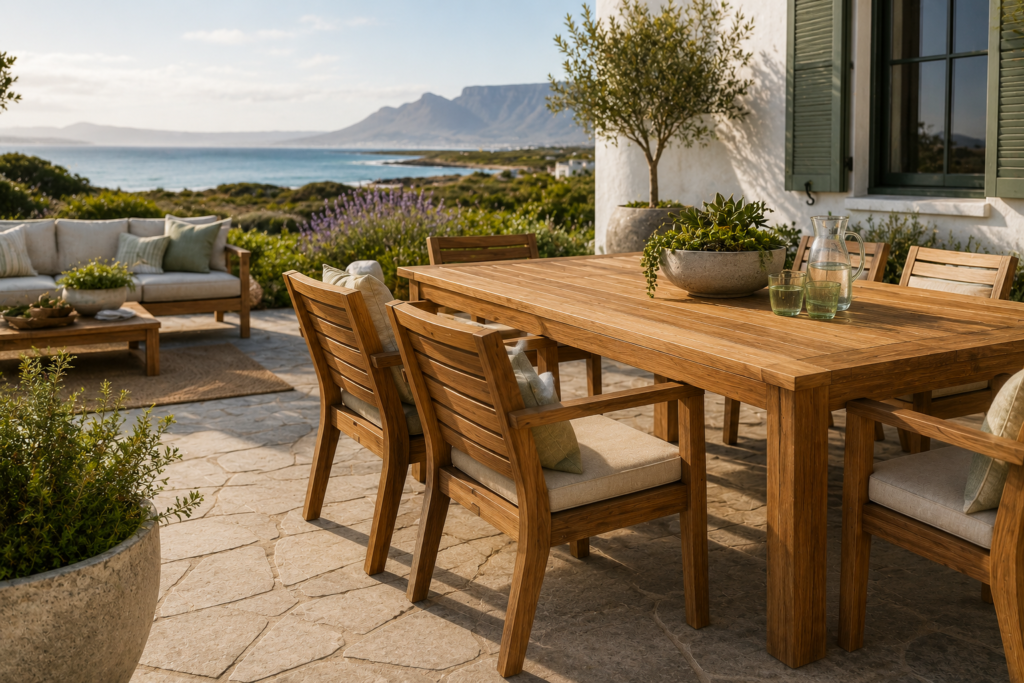
How to care for solid teak outdoor furniture
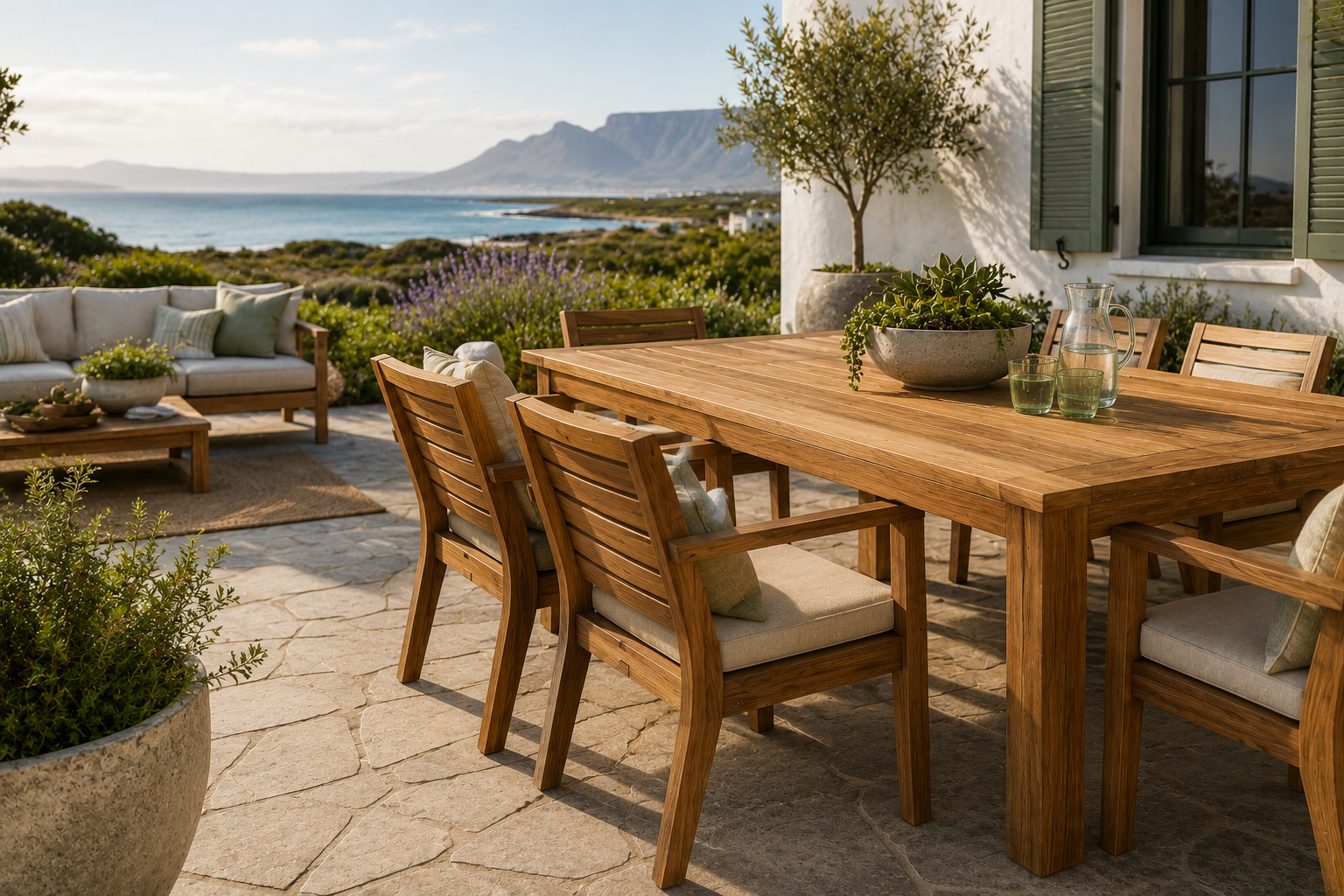
Teak has furnished outdoor spaces for generations largely because it needs so little to keep looking good, but a little routine care still makes a real difference over the life of a piece. Here is what genuinely matters, and what is safe to skip.
Why teak works outdoors
Teak's reputation as the benchmark outdoor timber comes down to its natural oil content. Unlike most hardwoods, teak contains high levels of natural oils that make it naturally resistant to water, rot, and insect damage without any chemical treatment. It is also dense and stable, which means it resists the warping and cracking that affects many other timbers as they move through repeated wet and dry cycles.
To oil or to silver
There are two genuinely valid approaches to teak maintenance, and the choice comes down entirely to preference rather than one being objectively correct. Left untreated, teak weathers naturally to a soft, even silver grey over twelve to eighteen months of sun exposure, a look many owners find more attractive than the original honey tone, and one that requires no ongoing maintenance beyond routine cleaning.
Alternatively, a teak oil or protective sealant applied two to three times a year keeps the wood closer to its original warm colour, but it does require that ongoing commitment. Once a piece has been left to silver for more than a season, oiling it again will not restore the original colour evenly, so it is worth deciding on an approach early and staying consistent with it.
Routine cleaning
A soft brush and a hose down every few weeks removes dust, pollen, and surface grime before it has a chance to work into the grain. For a more thorough clean, a mild soap solution applied with a soft brush, worked gently with the grain rather than against it, handles most everyday dirt without damaging the surface.
Avoid pressure washers on teak. The force can strip away the softer early wood growth rings and leave the surface rough and uneven over time, permanently changing the texture of the timber.
Removing stains and mildew
Teak's natural oils make it more resistant to mildew than most outdoor timbers, but the black or grey spotting associated with mildew can still appear in consistently shaded, damp corners of a garden. A solution of diluted white vinegar or a dedicated teak cleaner, scrubbed gently with a soft brush and rinsed thoroughly, generally clears it without the need for anything harsher.
Avoid bleach based cleaners, which can lighten the timber unevenly and leave a patchy, bleached appearance that is considerably harder to correct than the original stain.
Storage over the wet season
Solid teak is genuinely built to stay outdoors year round, and does not require the same seasonal storage that fabric or less weather resistant materials do. That said, cushions and any fabric elements should still be brought under cover through the wettest stretch of a Cape winter, and it is worth checking that furniture is not sitting directly on a permanently damp surface, which can encourage mildew at the point of contact even on a material as resistant as teak.
Teak from a responsible source
Not all teak on the market comes from the same kind of forestry, and it is worth asking the question before buying. Older growth teak, harvested from natural forest, is increasingly restricted and, where it is still available, typically commands a considerable premium. Plantation grown teak, cultivated specifically for furniture production on a managed rotation, offers the same natural durability with a far more sustainable supply chain, and is the source used across the Antherian range. It is worth asking any supplier directly where their teak is grown and how it is certified, since the difference matters both environmentally and, over time, for the consistency of the timber itself.
Hardware and fittings
The timber tends to get all the attention, but the metal fittings holding a piece together deserve equal care. Stainless steel hardware, used throughout Antherian's joinery, resists rust far better than standard steel, but it is not entirely immune to the effects of salt air over many years. An occasional check of visible bolts and fittings, tightened if they have worked loose and wiped down if a light surface bloom has developed, prevents the small movement that eventually leads to a wobbly joint on an otherwise sound piece of furniture.
A material built to age well
The real appeal of teak is that it does not need to look new to look good. A well cared for teak table develops a texture and colour over years of use that a newer piece simply cannot replicate, and that gradual change is generally treated as a feature of the material rather than a flaw to correct.
It is worth passing this same guidance on to whoever else uses the space regularly, whether that is family, tenants, or venue staff for a hospitality setting, since the biggest threat to a teak piece is rarely the weather itself but an over eager attempt to clean it with the wrong product. A simple routine, followed consistently, will always outperform an occasional intensive treatment.
Antherian teak dining and lounge pieces are solid hardwood throughout, built to be oiled or left to silver as you prefer. Ask us about the right maintenance routine for your specific piece.
Your home.
Our obsession.
Every commission begins with a conversation. Tell us about your space, your vision, and how you live. We will take it from there.