
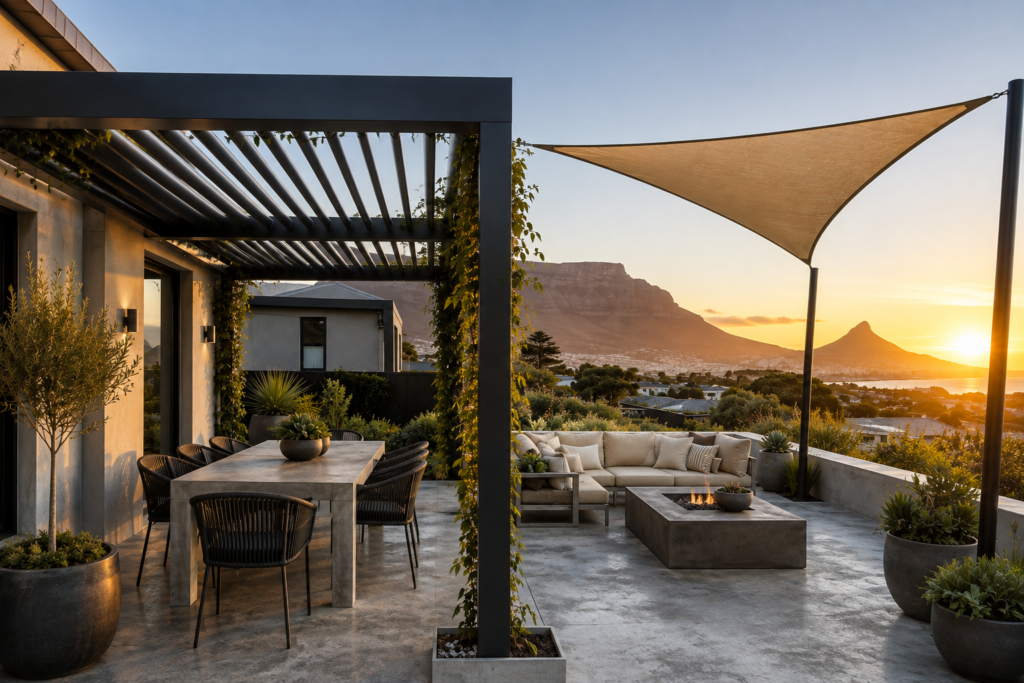
Pergola or shade sail? Choosing the right structure for a Cape terrace
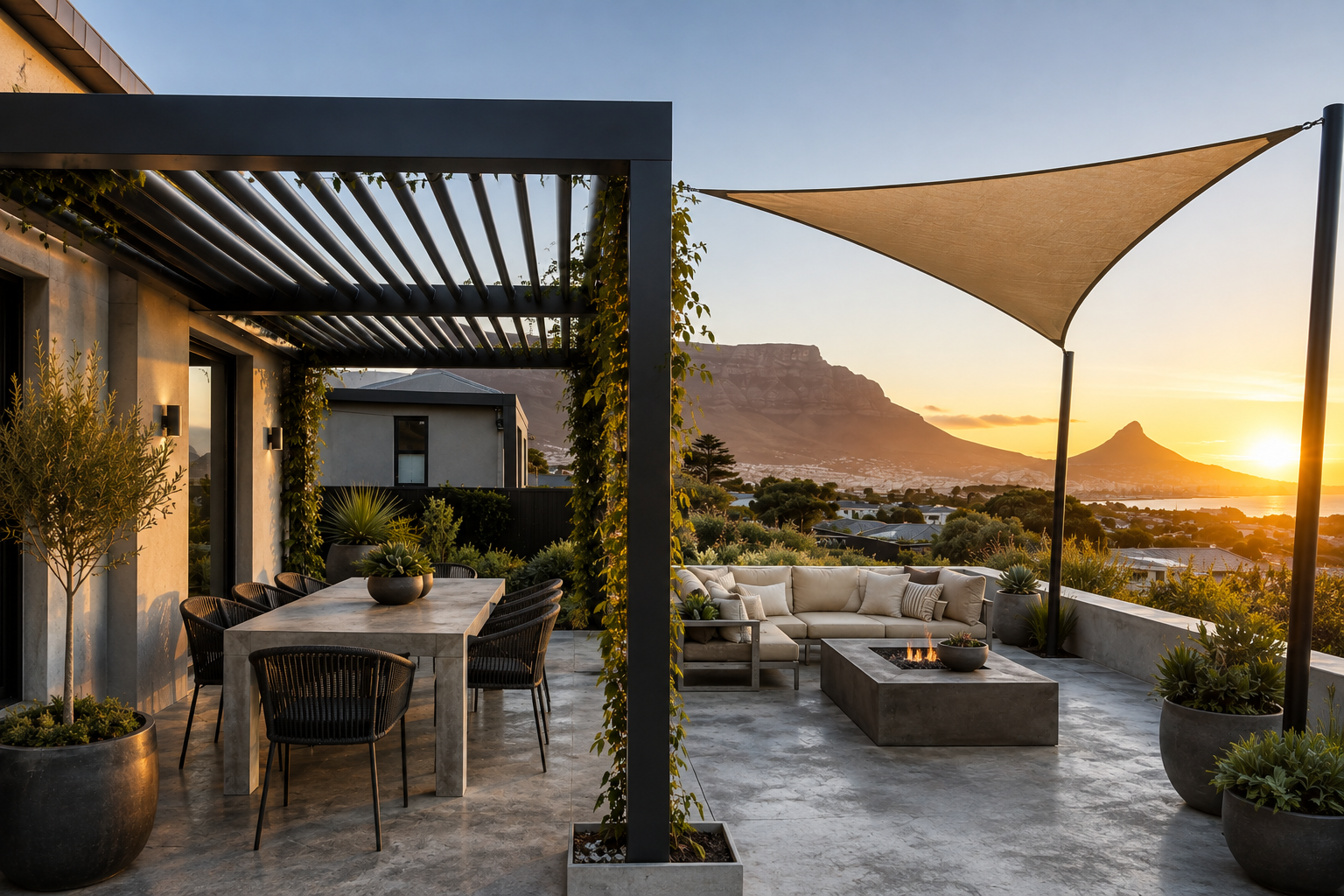
Shade is not optional in a Cape garden. A Cape summer sun sits almost directly overhead by midday. A South-Easter can turn an unsecured structure into a genuine hazard. Given both, the choice between a pergola and a shade sail deserves more thought than it usually gets. Here is how to work out which one actually suits your terrace.
What each structure actually does
A pergola is a permanent, engineered piece of architecture. Builders typically make it from timber or aluminium posts and beams, and sometimes add a fixed or retractable roof panel. It reads as a genuine extension of the house and adds real structure and shadow to a terrace. It can also carry additional features such as integrated lighting, heating, or climbing planting.
A shade sail is a piece of tensioned fabric. Installers stretch it between fixing points and hold it taut under load. It is lighter, generally faster to install, and considerably more flexible in shape and positioning. But it offers less permanent architectural presence. It typically needs to come down for winter storms, or use fabric specifically rated to withstand them.
Wind load: the deciding factor in the Cape
For most Western Cape gardens, wind resistance is the single most important factor in this decision. It matters more than either budget or appearance. The Cape South-Easter is strong enough in summer to place genuine structural load on any large surface. A poorly engineered shade sail or pergola roof can fail exactly when you need it most for shade.
A well-engineered pergola, anchored on solid footings, tends to handle sustained coastal wind more predictably than a shade sail. Its rigid structure explains the difference, rather than relying on tension alone. A shade sail can still perform very well in an exposed site. But installers need to specify the correct fabric rating, anchor points, and tension for that garden's wind exposure. Buyers should never treat it as an off-the-shelf solution.
Rain and year round use
A shade sail addresses sun exposure only. It does nothing for rain. Most fabrics cannot carry standing water. A sail left up through a wet Cape winter risks genuine damage. A pergola with a solid or louvred roof panel extends usefully into a wet-weather structure. It turns a summer shade feature into a space you can use comfortably for most of the year.
A terrace often needs to work through a Cape winter as well as summer, for daily family use or hospitality. Where you cannot afford to lose covered seating to weather, a roofed pergola is the more practical long-term investment.
Fixed or retractable
Within the pergola category itself, a further decision sits between a fixed roof and a retractable or louvred system. A fixed roof offers the most reliable weather protection and the lowest long-term maintenance. It has no moving parts to service. A retractable or adjustable louvre system costs more. But it allows the same structure to open to full sun on a clear day. It can also close for shade or light rain within minutes. This offers genuine flexibility for a garden used all year.
Matching structure to architecture
Scale and material matter as much as the mechanical choice. Choose a pergola built in a material that matches or complements the house. That might mean timber, aluminium, or a mix of the two. It then reads as a considered extension of the architecture rather than an add-on. A shade sail, by contrast, tends to suit a more informal, softer garden aesthetic. It works particularly well over an area that sits out of direct sight from the house's main living spaces.
Cost and lead time
A shade sail is generally the faster and less expensive of the two structures to specify and install. You can often achieve it within a few weeks of confirming a design. A pergola, particularly one with a retractable or louvred roof system, involves considerably more engineering, groundwork, and installation time. Plan it well ahead of the season it will serve, rather than order it at the last minute before summer. Budget both as a genuine structural investment in the property, not as a purely decorative furniture purchase. Either will give you years of use.
What Antherian builds
Antherian engineers every pergola and shade sail specifically for coastal wind load, rain, and UV exposure. We offer fixed, retractable, and double-top ventilated configurations depending on how exposed the site is. We specify every structure to the individual garden rather than sell a single standard size. The difference between a sheltered courtyard and an open, coastal-facing terrace changes almost every decision in this guide.
Tell us about your site, its exposure, and how you want to use the space. We will recommend the right structure — fixed or retractable, timber or aluminium — sized correctly for your garden.
Your home.
Our obsession.
Every commission begins with a conversation. Tell us about your space, your vision, and how you live. We will take it from there.